







If you’re building a biotech company in Canada, you already know the hardest part isn’t having a good idea, it’s getting that idea from a bench experiment to a product that can reliably ship, every day, into a highly regulated market. Investors, partners, and founders ask the same question: Where do we find the right lab space, and who can actually help us scale when the science works?
Those are gaps that both SPEC Labs and ATS Life Sciences Systems (LSS) are working to close.
The Biotech Journey, In Plain Language
Biotech companies move through a similar arc:
- Prove the science in the lab
- Refine the process so it’s repeatable and robust
- Scale production, add automation, and navigate regulation
- Expand capacity, launch new products, and enter new markets
Different stages need very different infrastructure and partners. Early on, you need flexible wet lab space, specialized equipment, and a community that understands growth-stage biotech. Later, you need manufacturing and automation expertise to turn a protocol into a production line that can pass audits and support commercial demand.
Where SPEC Labs Fits In
SPEC Labs is built for the moment when a biotech company has outgrown the incubator but isn’t ready to build its own facility from scratch. It provides ‘graduation-stage’ coworking wet lab space in Mississauga, Ontario, tailored to venture-backed and scaling life sciences companies that need to move fast without committing to massive capital projects.
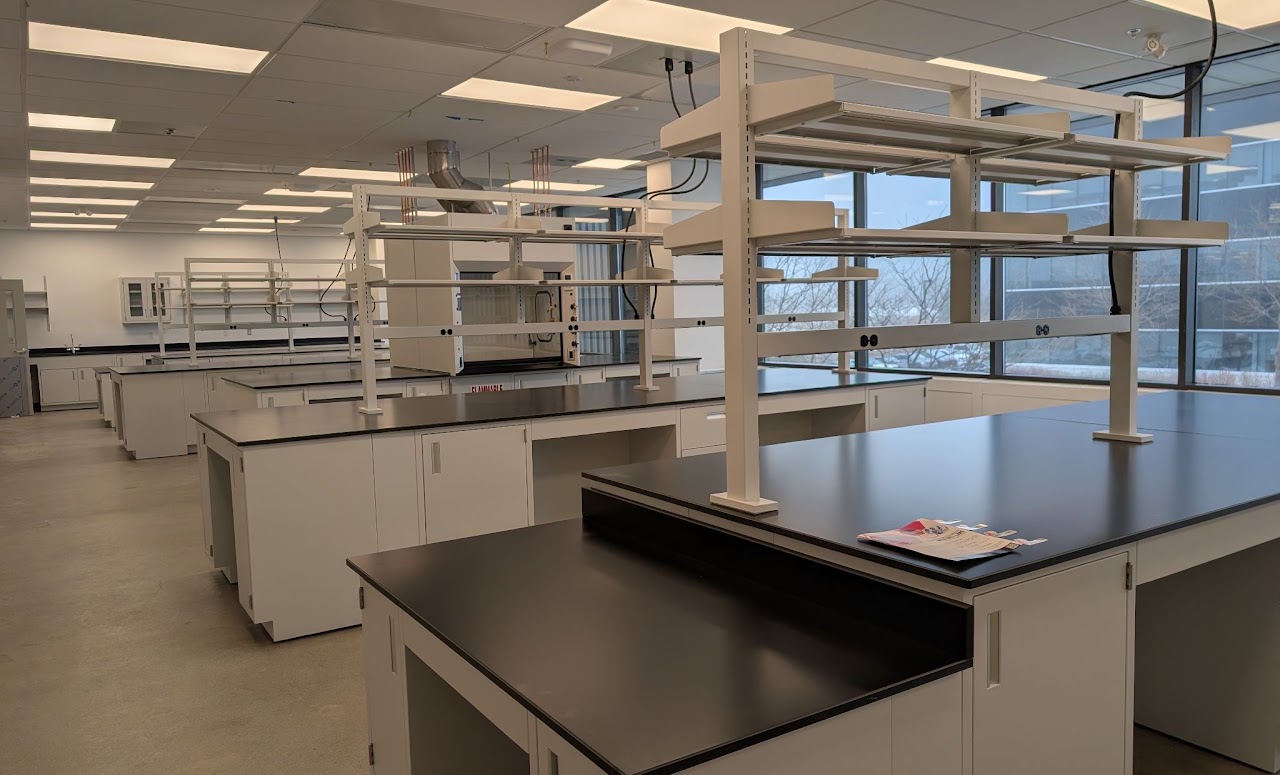
SPEC Labs sits in the heart of one of Canada’s densest life sciences clusters: Mississauga is home to more than 500 life sciences companies and over 26,000 employees, within a national ecosystem of more than 3,800 life sciences firms across Canada. Canada’s broader life sciences market is projected to grow from around 87.5 billion USD in 2025 to over 160 billion USD by 20311, which only increases the pressure on limited, high‑quality wet lab space especially for companies leaving incubators.
Across North America, demand for wet lab space has consistently outpaced supply, and the Toronto region has been no exception: Vacancy for quality wet lab space has remained very low, while the region’s life sciences workforce and venture activity have continued to grow. This creates a real bottleneck for innovators who have passed the proof‑of‑concept stage but still need flexible, capital‑efficient access to labs and shared equipment.
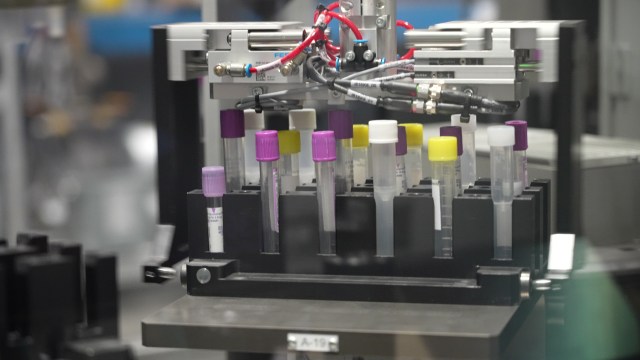
While the BioDot system takes care of the aliquoting, the rest of the aliquot process is prepped by the ATS system. Used pipette tips are stripped off the units and dropped into a chute preventing any cross contamination with the samples or the machine itself. When grabbing new pipette tips the system holds up to two hours’ worth of consumable tips to allow a significant walk away time from the aliquoting process, with the benefit of also being able to refill the pipette tip storage while the machine is operating.
In practice, that means:
- Ready-to-use chemistry and biology labs, cell culture space, and shared scientific infrastructure, so teams can start running experiments on day one instead of spending months on build-out;
- Flexible space and terms that allow companies to grow headcount and lab footprint as milestones are hit, instead of overextending on long-term leases;
- A community anchored in the Toronto–Mississauga life sciences cluster, connecting innovators to ATS and other industry partners, service providers, and collaborators across the ecosystem.
For innovators and partners, SPEC Labs reduces a key operational risk: It gives teams the physical and operational foundation to mature their science without distracting leadership with facilities problems.
Where ATS Life Sciences Systems Fits In
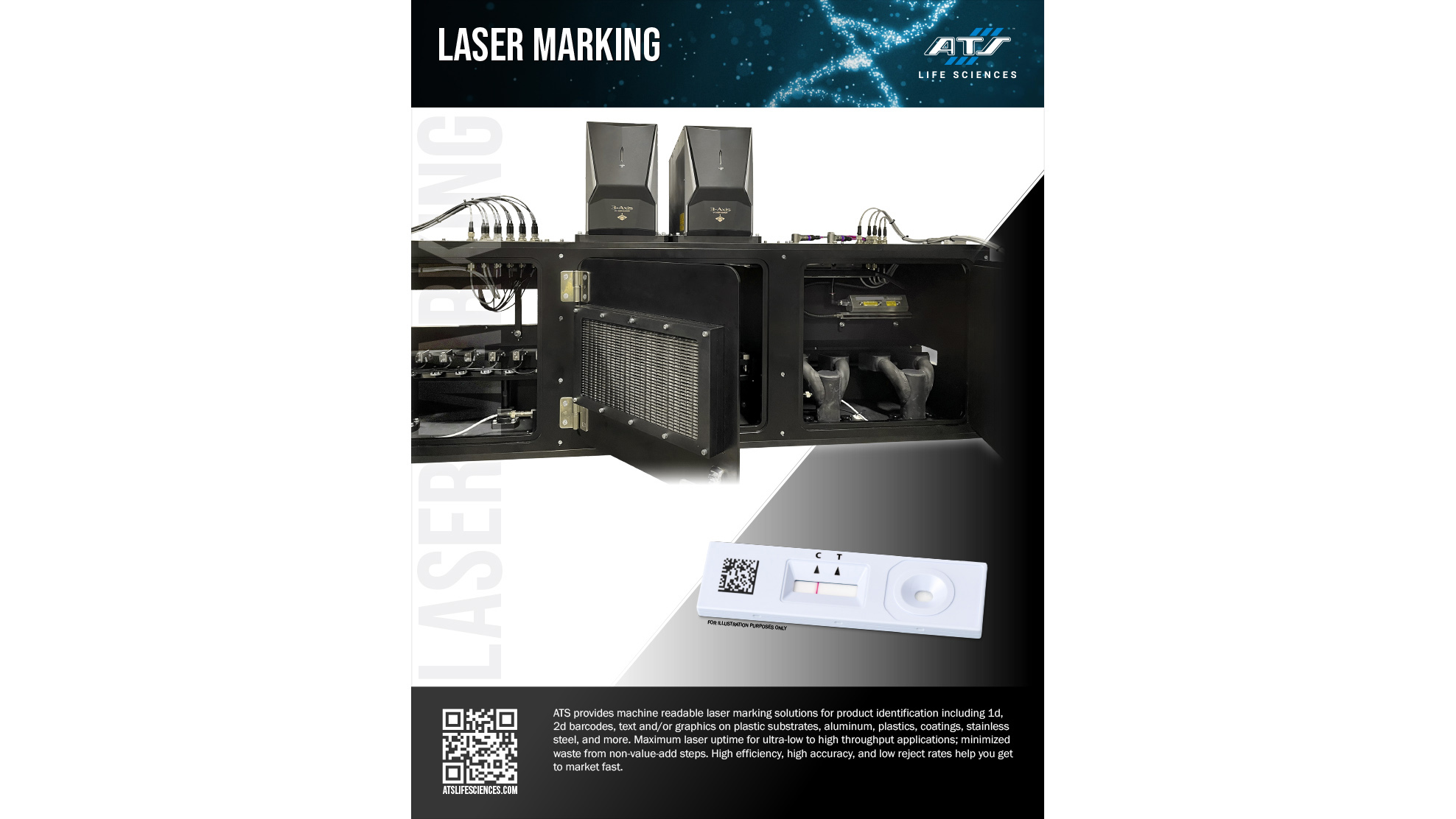
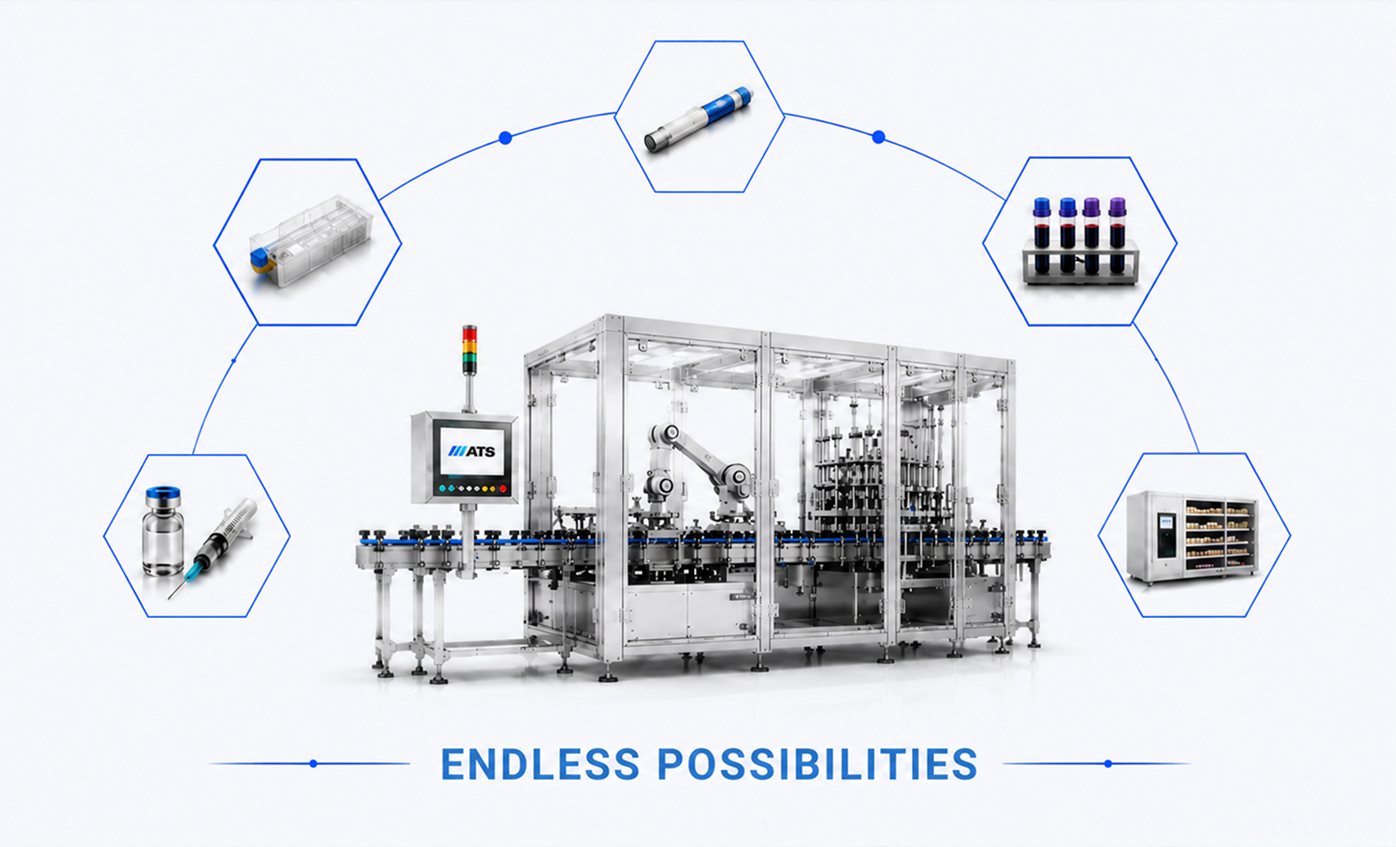
Once the science is working and the process is defined, the main question becomes: “Can this be manufactured at scale, safely, efficiently, and under regulatory scrutiny?” ATS LSS focuses exactly here, designing and delivering advanced automation and production solutions for diagnostics, medical devices, and other life science products. Proof-of-principle and design for automation (DfA) assessment in the pre-automation stage accelerates the path to production.
Demand for automation in life sciences is accelerating2; automation in life sciences alone is expected to add about 3.66 billion USD in new market value between 2025 and 2029, growing at roughly 8.7% per year, while the global lab automation market is projected to rise from about 8.36 billion USD in 2025 to around 14.78 billion USD by 20343. ATS sits directly inside this shift, bringing decades of high‑performance automation experience with leading life sciences companies, from point‑of‑care diagnostics to complex medical disposables and sterilization systems.

What that looks like on the ground:
- Translating lab workflows (for example in vitro diagnostics or specialized disposables) into automated systems that can handle ultra‑low volume dispensing, precision assembly, or complex tube set manufacturing at commercial throughputs;
- Building lines that are designed for quality, traceability, and regulatory expectations from day one, helping companies prepare for inspections and scale globally;
- Providing flexible platforms and modular conveyance technologies (such as systems built on SuperTrak CONVEYANCETM) that allow manufacturers to add capacity or new product variants without rebuilding entire lines.
- Integrating supporting technologies like E‑beam sterilization into broader manufacturing and release workflows to shorten cycles and speed product release.
ATS partners with innovators to translate lab-proven processes such as diagnostic assays, medical tube sets, and sterile devices into robust automated solutions that deliver consistent quality at commercial scale.
How SPEC Labs and ATS Connect Across the Lifecycle
Here’s how the two organizations plug into the same biotech lifecycle:
| Lifecycle Stage | Company Need | SPEC Labs Role | ATS Role |
|---|---|---|---|
| Discovery & validation | Space and tools to prove the science | Provide a turnkey wet lab and shared infrastructure | Offer early advice on manufacturability and future automation considerations, if needed |
| Process development | Make experiments repeatable and scalable | Enable process optimization and team growth in a flexible lab environment | Start translating processes into automation concepts and feasibility studies |
| Clinical & pilot scale | Produce consistent material and data | Support additional lab work, analytics, and collaborations with partners | Design and build pilot-scale automation and test modules |
| Commercial manufacturing | High-volume, compliant production | Serve as a hub for new programs and spinouts that may later industrialize with ATS | Deliver full production systems and long-term automation support |
A typical story might look like this: A life sciences startup moves into SPEC Labs to refine its assay and lock down a robust protocol. As clinical deployment approaches, it starts engaging with ATS to map that protocol into an automated line that can move from hundreds of tests a week to thousands a day. SPEC Labs de-risks the R&D and process development phase; ATS de-risks the automation phase.
Why This Matters for Innovators and Partners
For innovators, this combination removes two major friction points: Access to appropriate lab space when leaving the incubator, and access to credible manufacturing and automation expertise when you are ready to scale. Working with SPEC Labs and ATS LSS means you have partners and collaborators who understand both the scientific and operational sides of the journey.
For partners, whether you are a pharma company, diagnostics provider, hospital network, technology supplier, or public-sector organization, it means there is a local ecosystem in Canada where new life science ideas can be tested, matured, and industrialized without leaving the country. That strengthens the overall life sciences community, keeps talent and IP in the region, and creates more opportunities for collaboration across the entire value chain.
References:
-
Canada Life Science Market Size and Forecasts (2025–2031)
https://mobilityforesights.com/product/canada-life-science-market -
Industrial Automation in Life Sciences market report (for the 3.66B / 8.7% stat)
https://www.prnewswire.com/news-releases/industrial-automation-market-in-life-sciences-to-grow-by-usd-5-06-billion-from-2024-2028–as-rising-healthcare-demand-boosts-growth-with-ai-driving-market-transformation—technavio-302300756.html - Global Lab Automation market report (for 8.36B → 14.78B stat)
https://www.precedenceresearch.com/lab-automation-market



 Contact Us
  Subscribe
  LinkedIn
  Youtube